Environmental management

Audited and certified environmental management at Flughafen München GmbH

Flughafen München GmbH (FMG) attaches great importance to protecting the environment. However, as with comparable infrastructure facilities, operating a commercial airport inevitably has an impact on the environment. This impact can affect the airport grounds and surrounding areas in various ways. FMG is therefore committed to continuously improving its environmental performance. For 20 years now, a key pillar of this commitment has been the audited and certified environmental management system in accordance with the European EMAS Regulation (EC) No. 1221/2009 and DIN EN ISO 14001.

In collaboration with employees in FMG's environmentally relevant departments, a series of outstanding flagship projects have been developed and implemented in recent years. In the future, the environmental management system will continue to support FMG in continuously improving its environmental performance, reducing its impact, and thus making a valuable contribution to Munich Airport's journey toward becoming a green mobility hub. This is made transparent through communication and information about the environment at Munich Airport:

WE MAKE THE ENVIRONMENT VISIBLE.
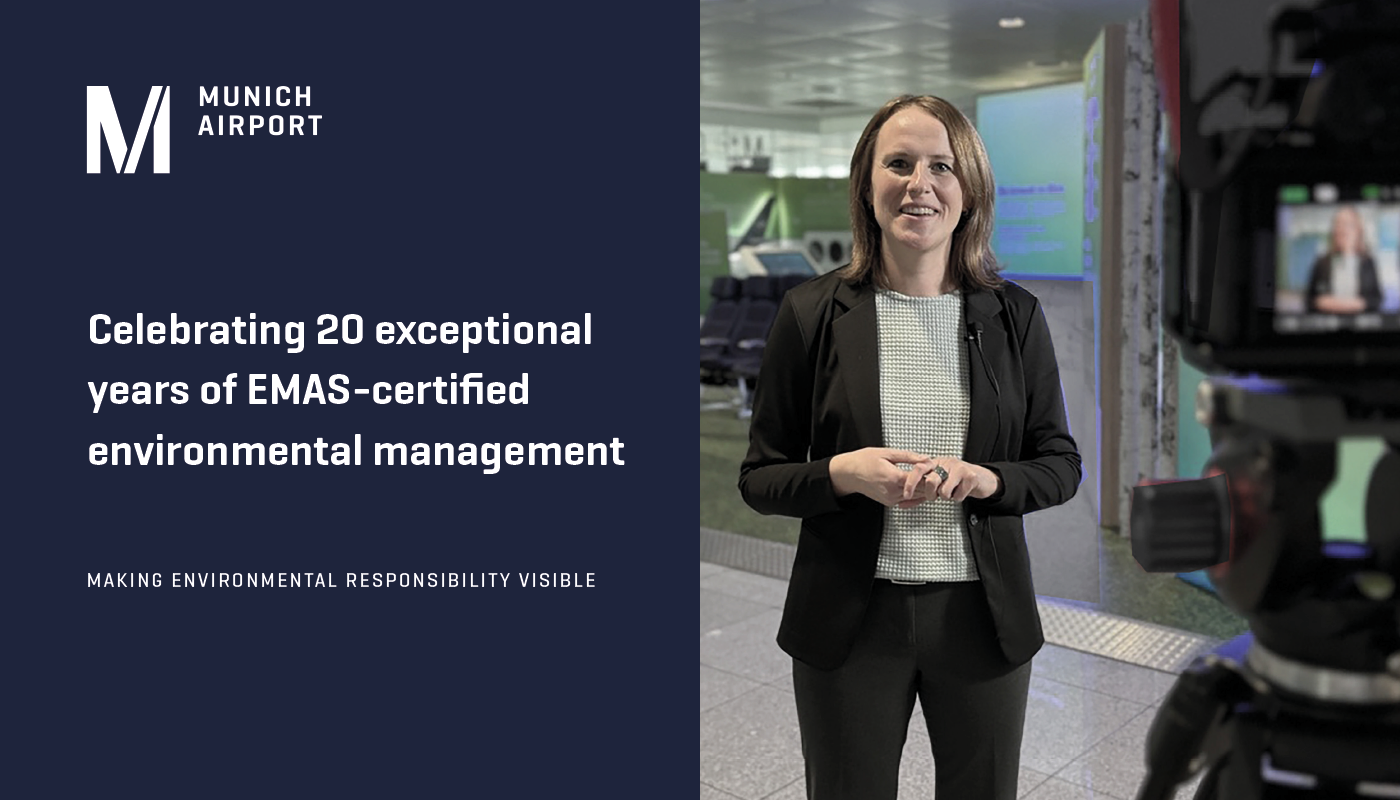
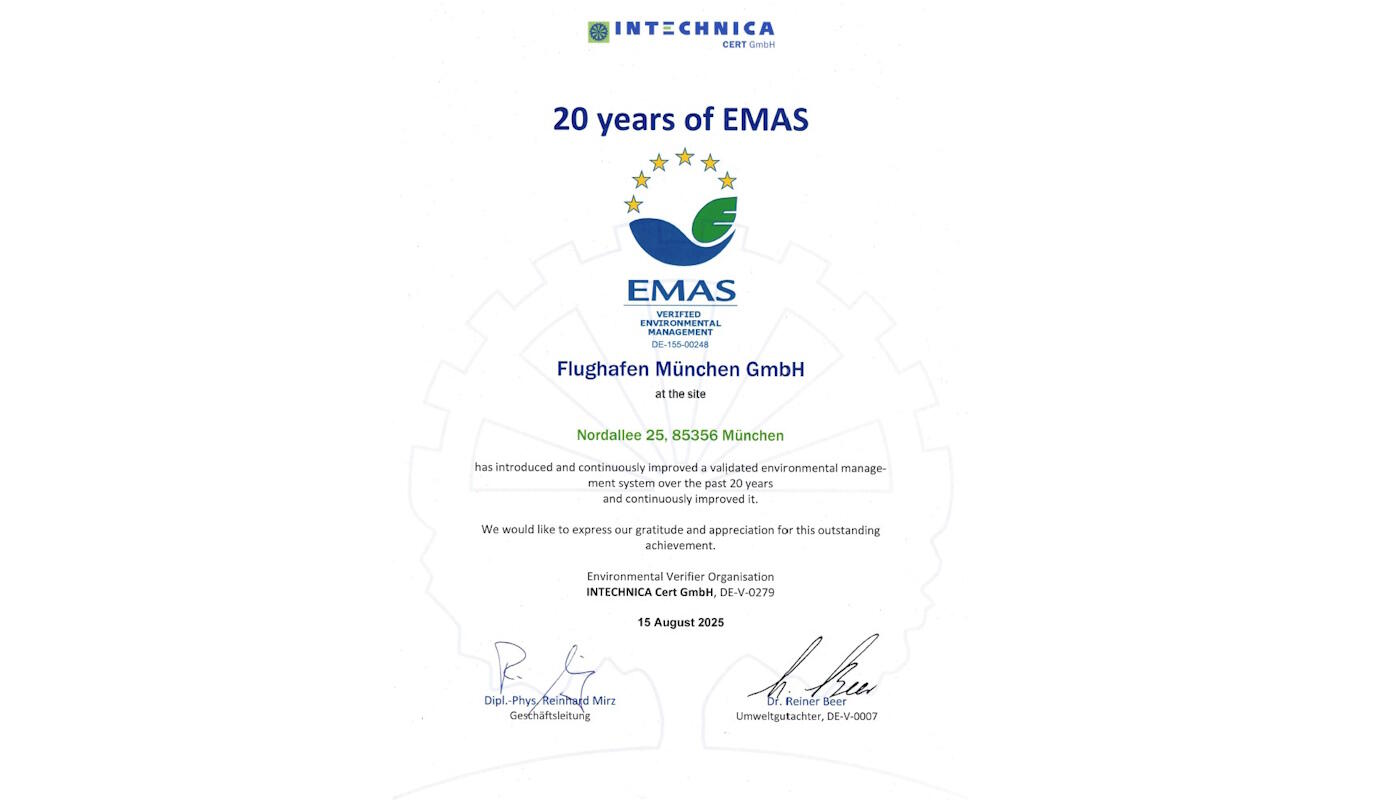
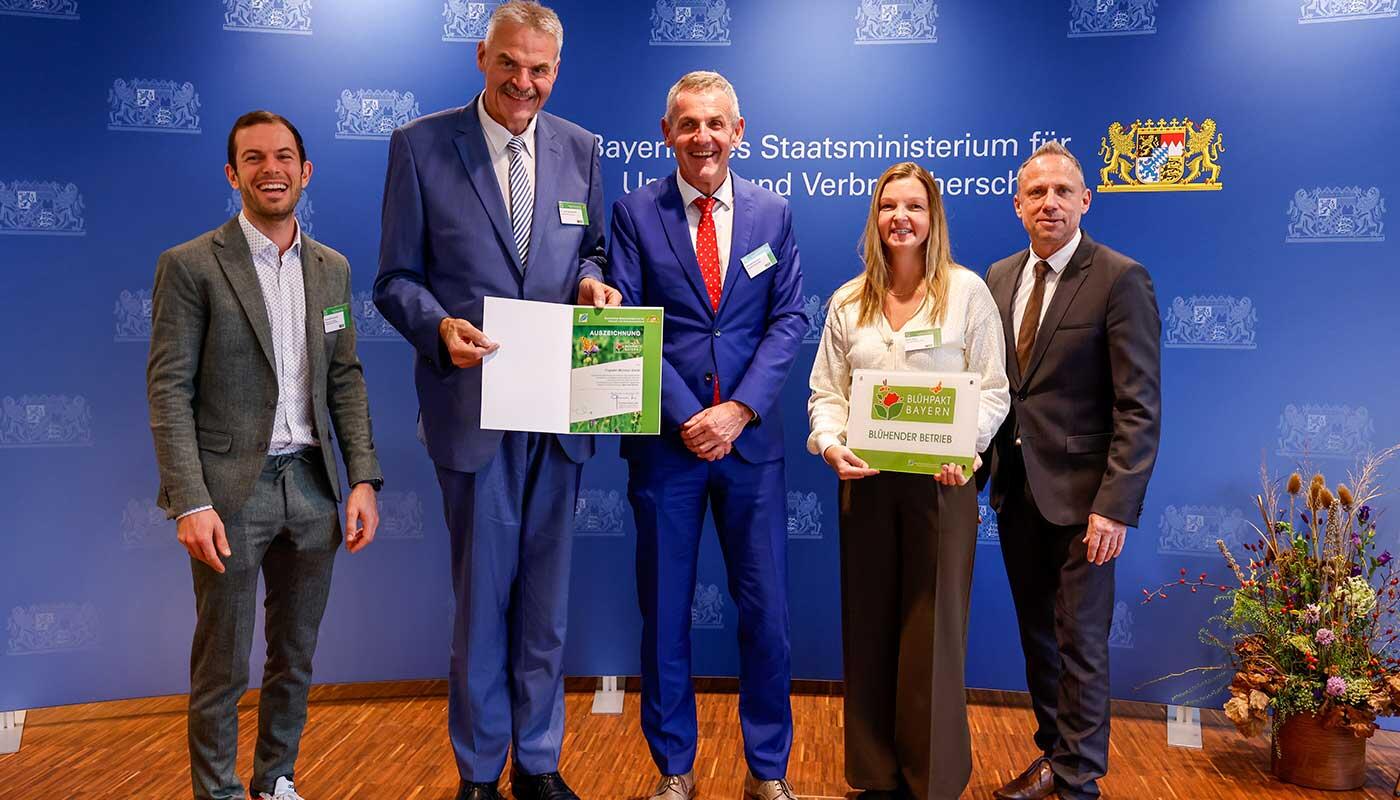
Certificate 20 years with EMAS

EMAS – Environmental management system at the highest level

The acronym "EMAS" does not stand for "emission makers and species protectors," but rather for "Eco-Management and Audit Scheme." It is a voluntary instrument of the European Union that supports companies and organizations in continuously improving their environmental performance. The legal basis is Regulation (EC) No. 1221/2009 (known as the EMAS Regulation).

EMAS contains all elements of an environmental management system in accordance with the international standard DIN EN ISO 14001:2015. In addition, EMAS requires further content such as expanded environmental communication and regular review of all environmentally relevant processes with regard to their compliance with applicable environmental legal requirements.

EMAS not only supports organizations in continuously improving their environmental performance, but also contributes to cost savings, a better reputation, and greater employee engagement.

Selected flagship projects from 20 years of EMAS

  • "Net Zero 2035" – The airport on its way to CO2-free airport operations


    In November 2023, Flughafen München GmbH set even more ambitious climate targets and aims to achieve "net zero" by 2035. The climate strategy has thus become significantly more ambitious. All information is available at the link above.

  • Organic label for Munich Airport honey

    Since 2023, Munich Airport honey has been allowed to carry the EU organic label and the German organic label on its packaging. It is the first honey from a German airport to meet the requirements of European Regulation (EU) 2018/848 on organic production and labeling of such products.

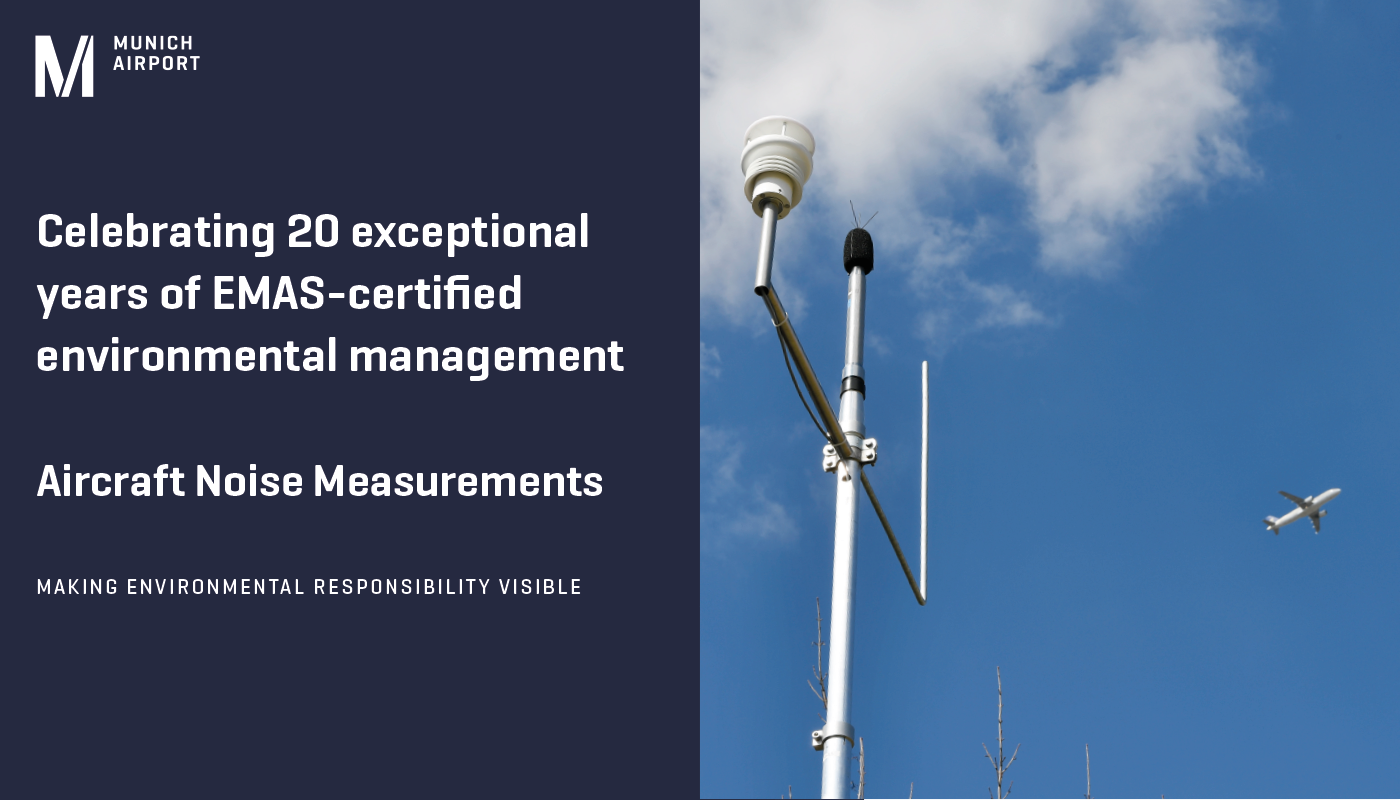
  • State-of-the-art aircraft noise measuring station


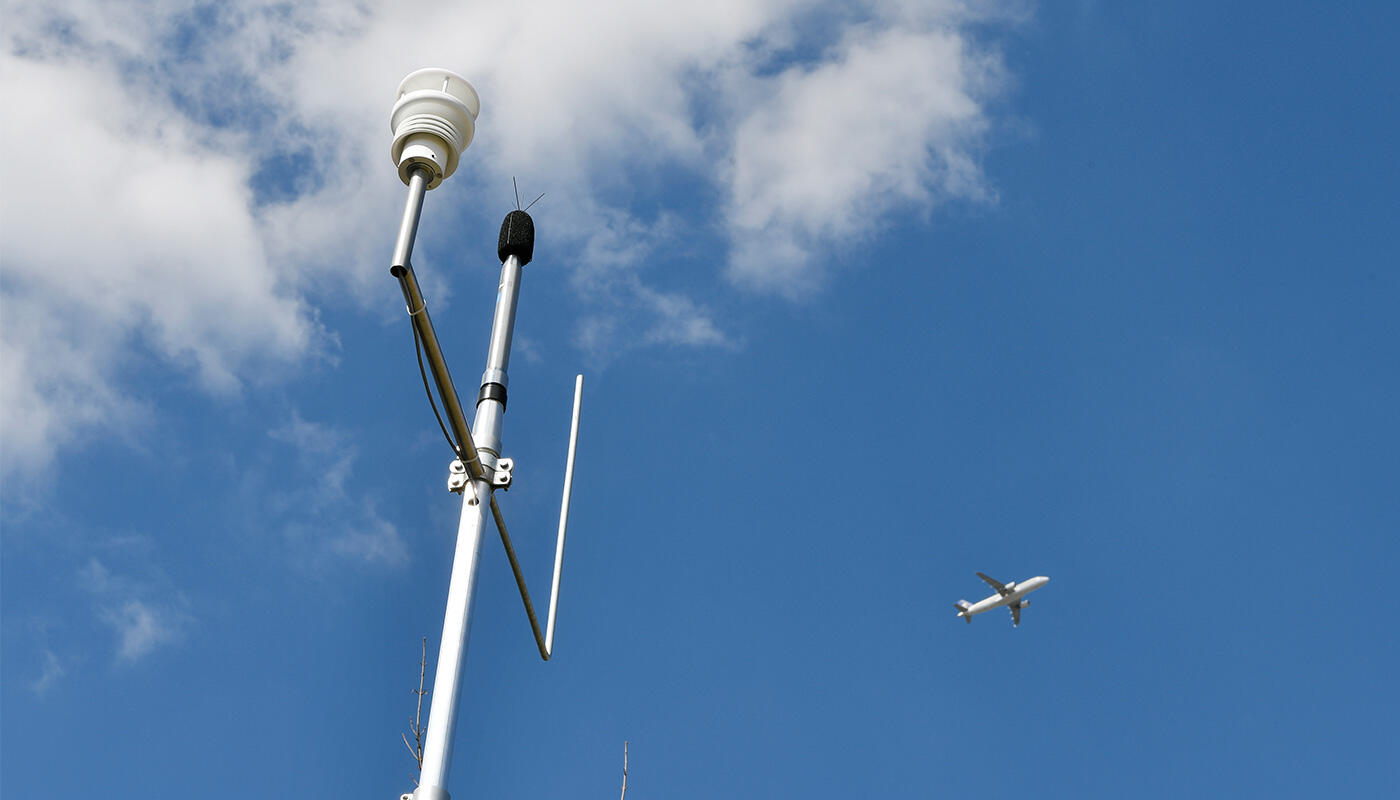
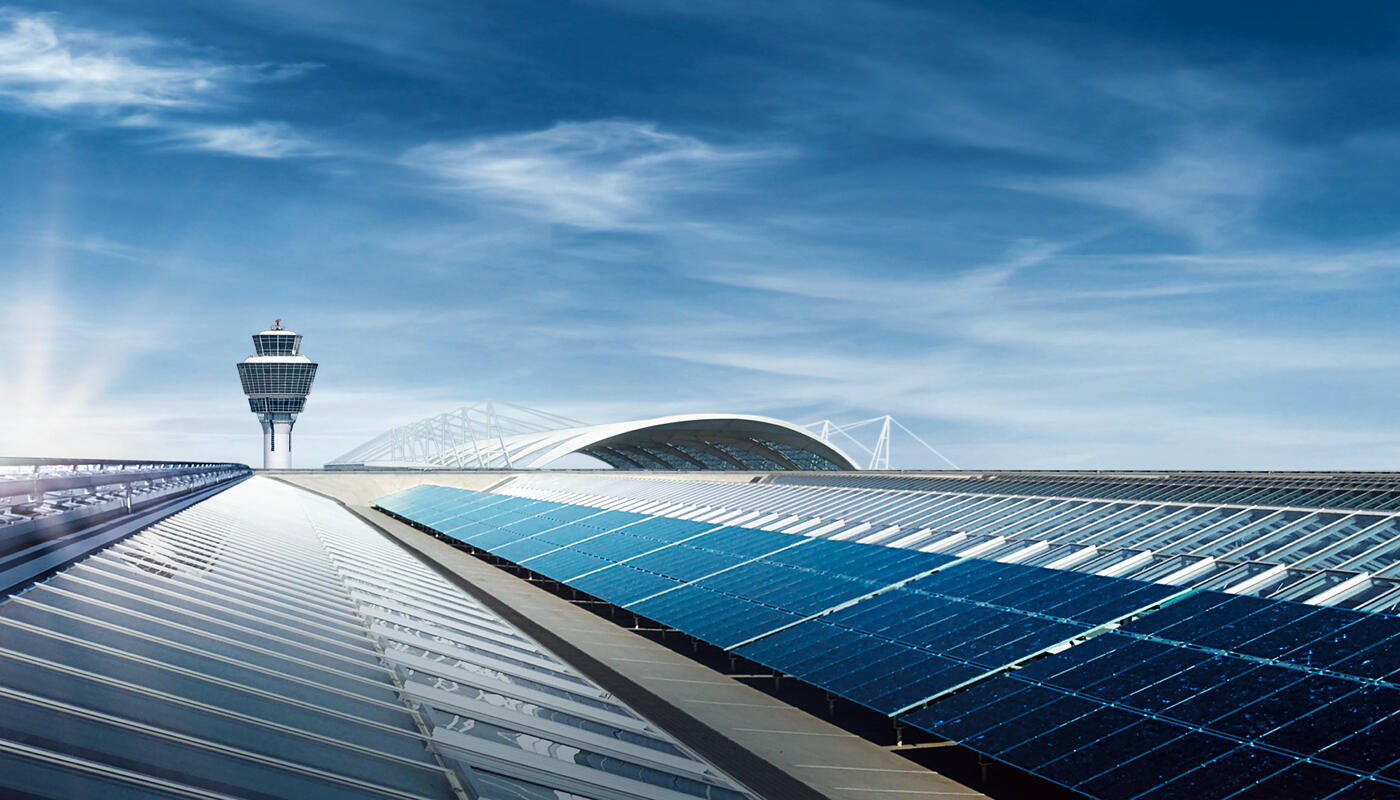
    In 2019, Munich Airport commissioned a new state-of-the-art aircraft noise measuring station that is completely independent of the power grid thanks to photovoltaics. The system is used for mobile measurements in the region. The solar module has a total output of 285 watts, and surplus energy is fed into a buffer storage unit. If this storage unit is ever empty, a fuel cell automatically switches on to supply the measuring station with the energy it needs. The system measures aircraft noise emissions on site around the clock, seven days a week. The results are published in real time on the internet, as are the measurements from all other stations.

  • Switch to LED technology 


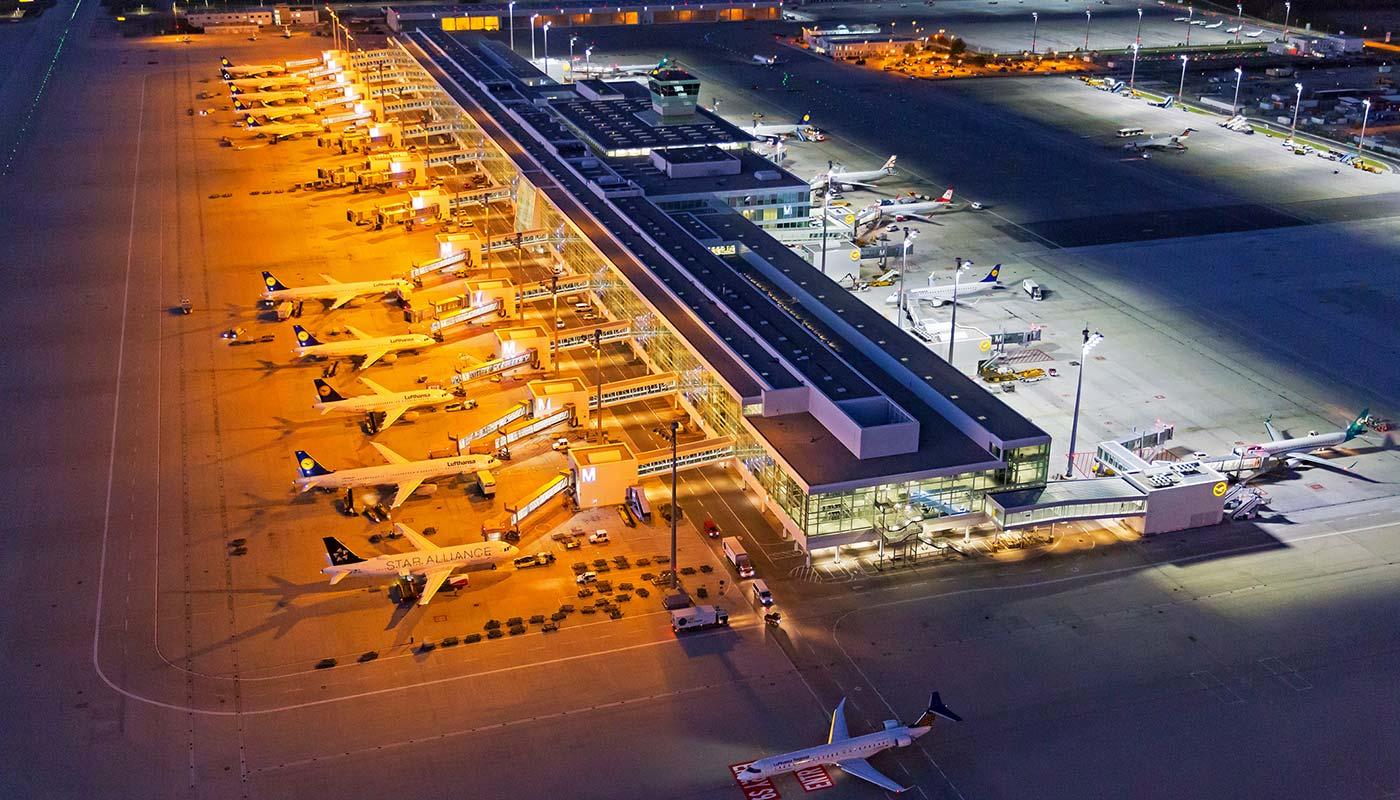
    After a six-year implementation phase, the conversion of the entire apron lighting to energy-saving LED technology was completed in 2018. With 185,000 LEDs in around 1,900 lights on light poles up to 34 meters high, Munich Airport has the largest LED high-mast system in the world. The LED lighting impresses with its particularly high energy efficiency and improved luminosity—and that with a long service life and low maintenance costs.

  • Service water concept to conserve drinking water resources

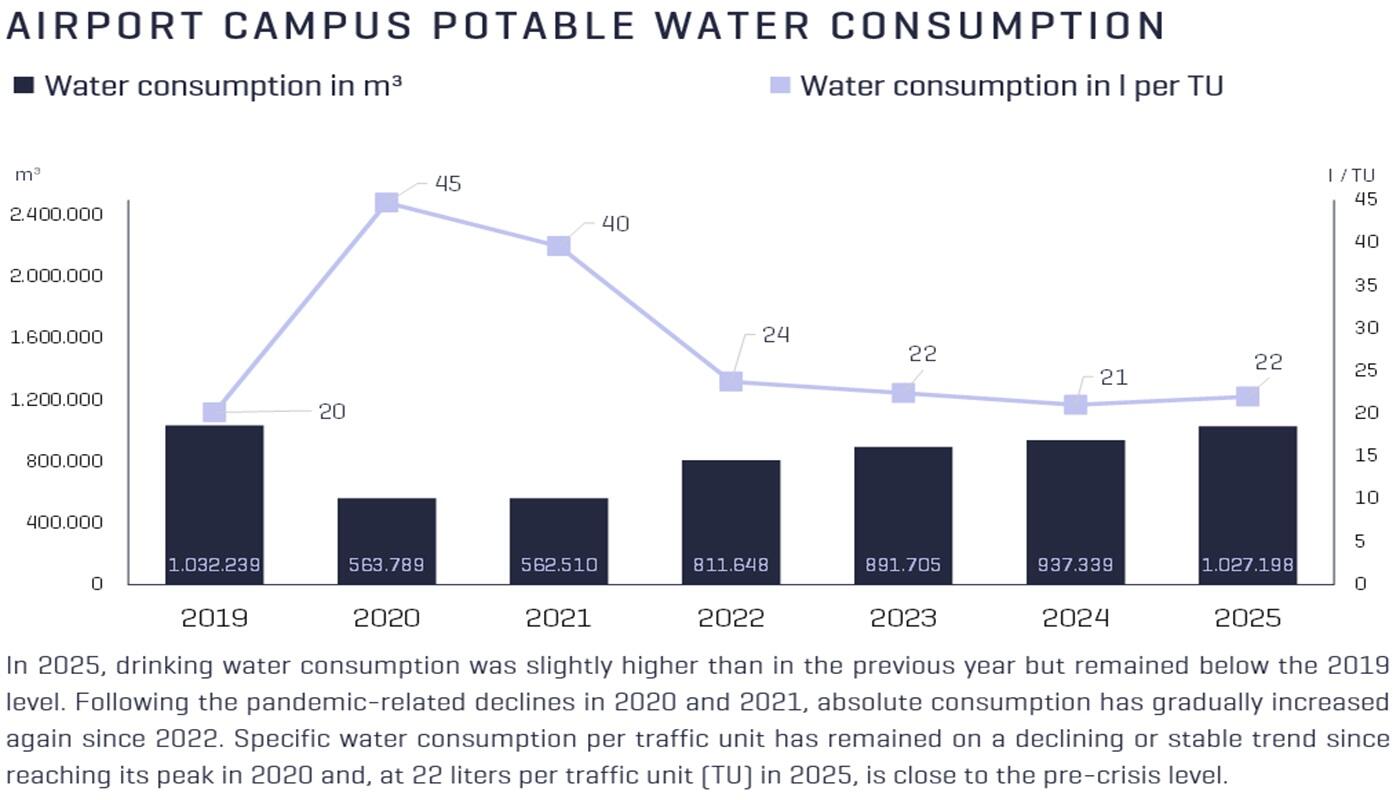
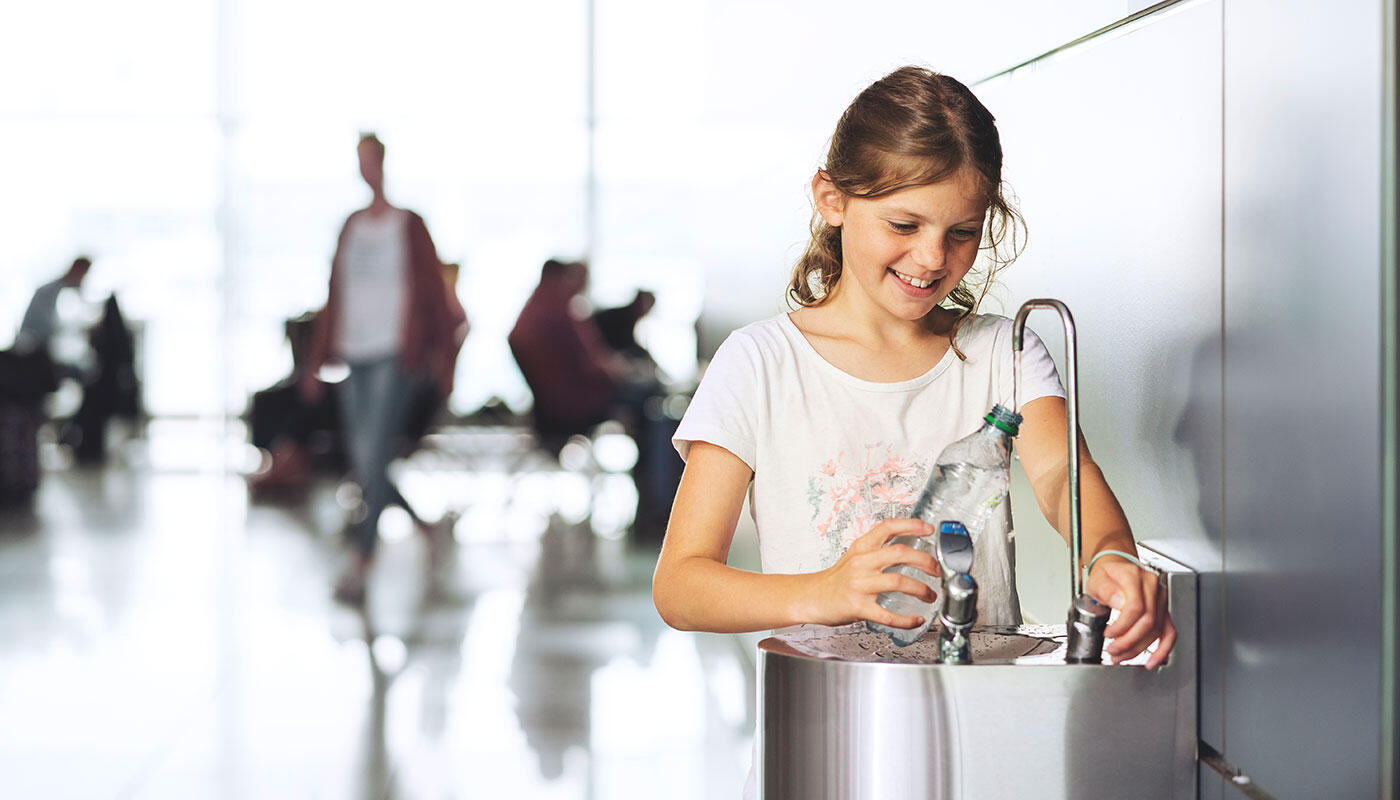
    Drinking water is essential for life. Its availability in sufficient quantity and quality must be ensured on a permanent basis. Munich Airport pursues the goal of using drinking water sustainably and sparingly. Not every water requirement necessitates drinking water quality. In the interests of sustainable and economical use of drinking water, it is therefore used as far as possible only where drinking water quality is necessary. The long-term goal is to cover approximately 30 percent of the total water demand at Munich Airport with industrial water wherever drinking water quality is not required.

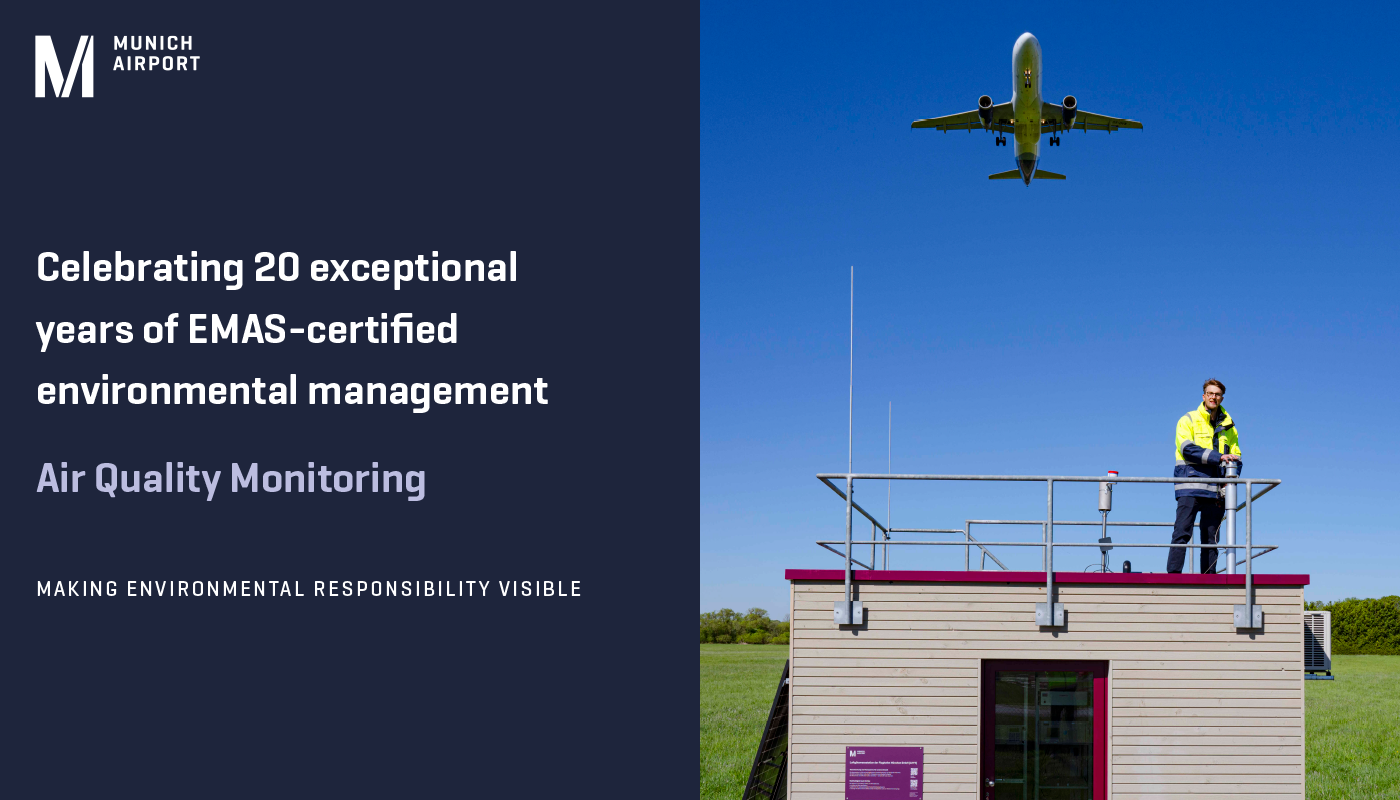
  • Mobile measuring station for determining air quality

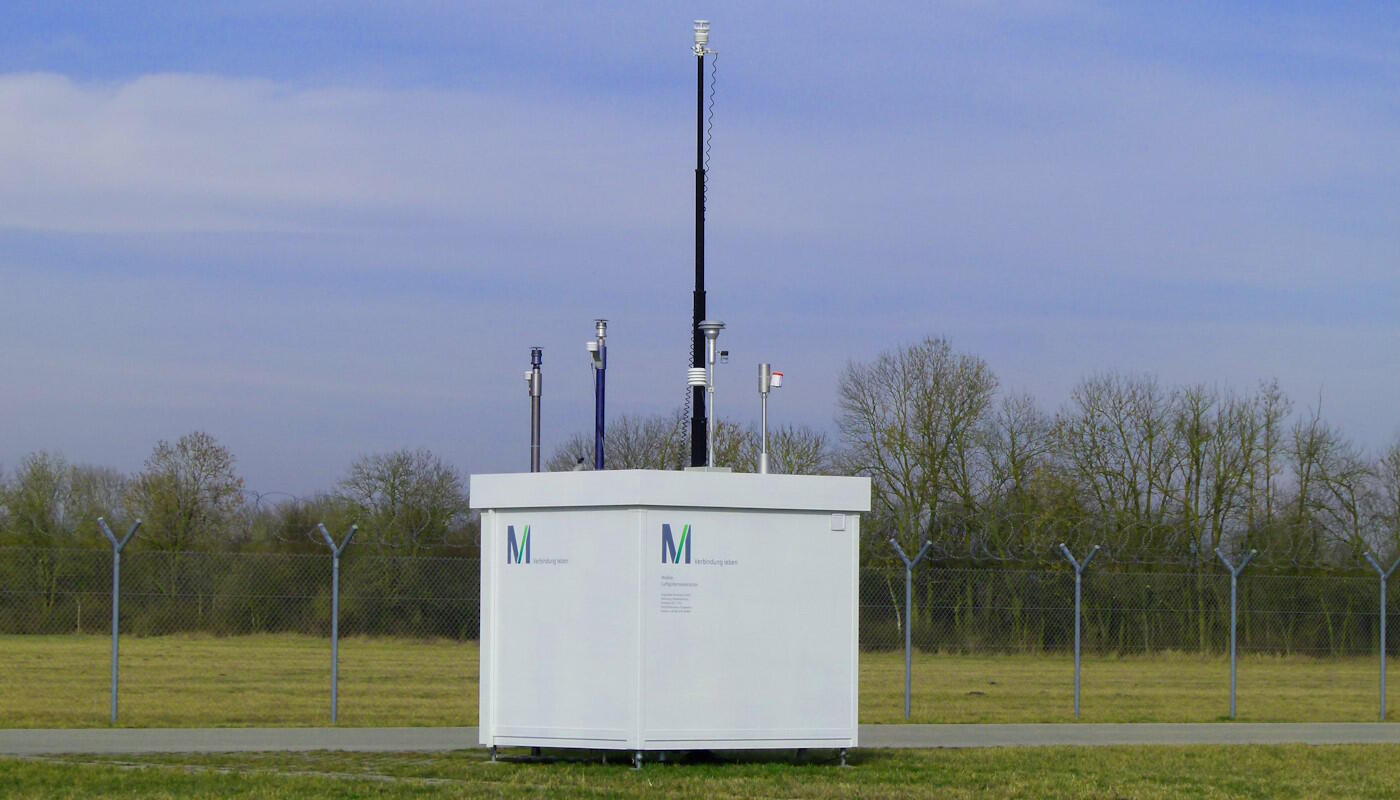
    In 2014, FMG became the first airport operator in Germany to put a mobile air quality measuring station into operation. Upon request, it is made available to surrounding communities to test air quality there in cooperation with an independent measuring institute. The complete measurement reports are published online by Munich Airport. The air quality data collected is also available online in near real time via the airport's air quality monitoring system.

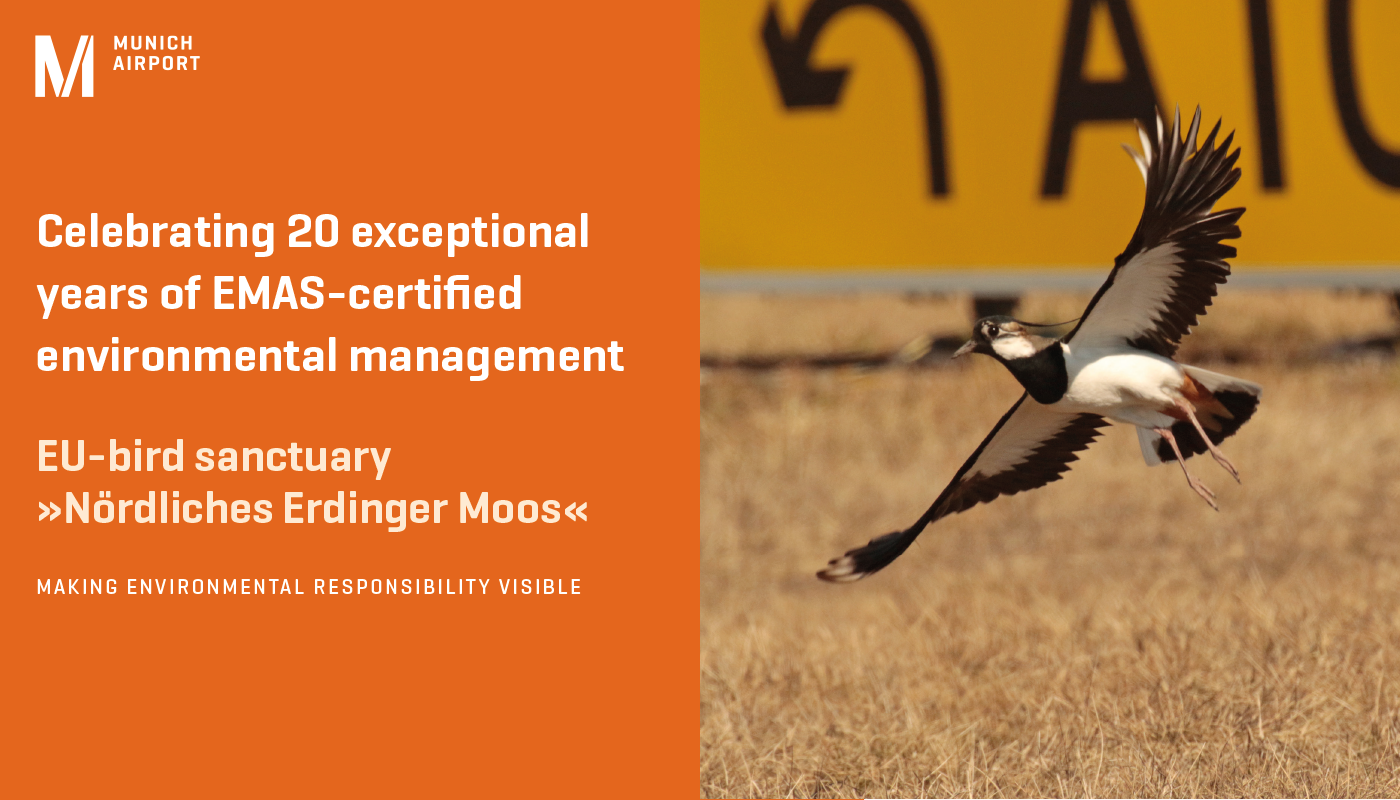
  • Airport meadows as part of the "Northern Erdinger Moos" bird sanctuary

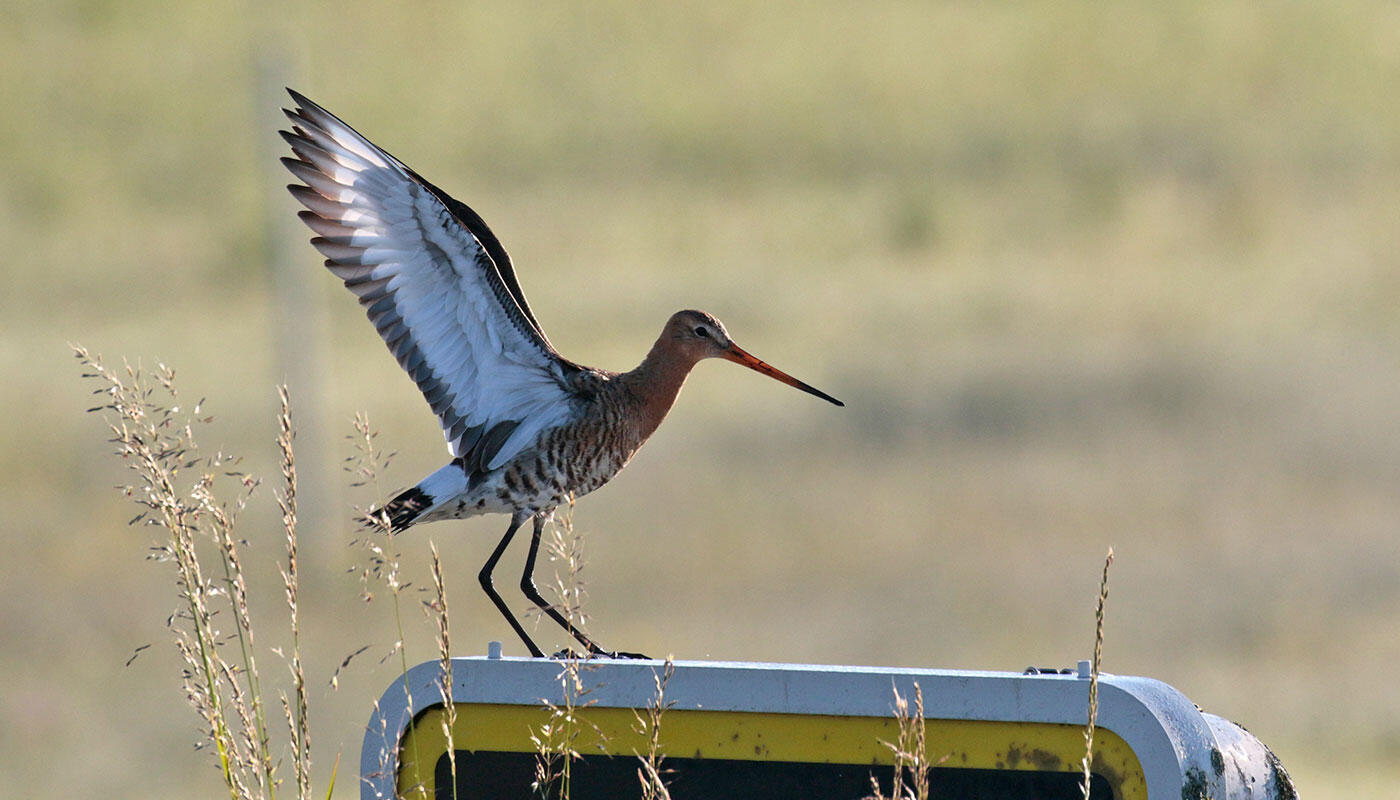
    On August 1, 2008, the areas in the "Northern Erdinger Moos" were designated as an EU bird sanctuary. The bird sanctuary covers 4,525 hectares, which is equivalent to around 6,400 soccer fields. It includes the 666-hectare airport meadows along the two runways and the areas of the Northern Erdinger Moos adjacent to the airport grounds to the north and east. The airport meadows are of great importance for many meadow birds, such as the endangered curlew, the highly endangered lapwing, and the endangered skylark. Even one of Bavaria's 19 breeding pairs of the endangered black-tailed godwit has established itself there ("7th Statewide Meadow Bird Mapping in Bavaria 2021," State Office for the Environment; March 2023). This is proof that nature and technology have been harmonizing very well for many years.

  • Innovative de-icing agent management


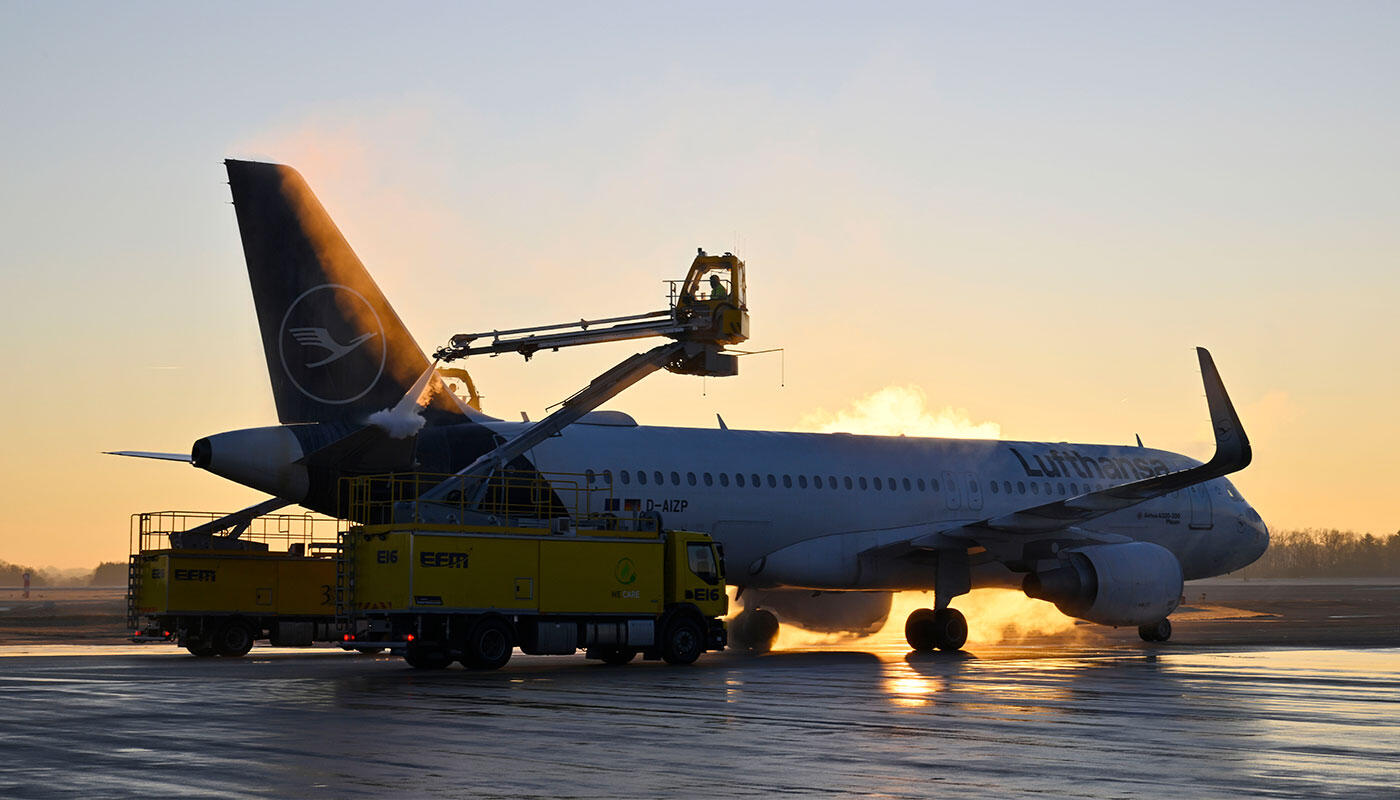
    Munich Airport is one of the few airports worldwide that collects the de-icing fluid that drips off aircraft during de-icing in winter, recycles it on site, and reuses it. Depending on weather conditions, a total of approximately 2,500 to 9,000 tons of aircraft de-icing fluid is used during de-icing in a single winter, with approximately 40–60% coming from recycling. The recycled portion no longer needs to be treated at the Eitting wastewater treatment plant of the "Erdinger Moos" wastewater association, but can be reused as new de-icing fluid. This is both economically beneficial and gentle on the environment and resources.

Haben Sie noch Fragen?

Environmental management

Konzerneinheit Umwelt
  • P.O. Box 23 17 55
  • Zip code / City 85326 Munich