Water Protection and Monitoring

Groundwater Monitoring

Approximately 330 monitoring stations continuously measure the groundwater level within and around the airport. Water samples are regularly collected at selected monitoring stations and tested for a wide range of substances.

During the winter months, monitoring is intensified to detect any potential impacts from deicing agents at an early stage. Long-term measurement results show no adverse changes in groundwater quality due to the construction and operation of the airport.
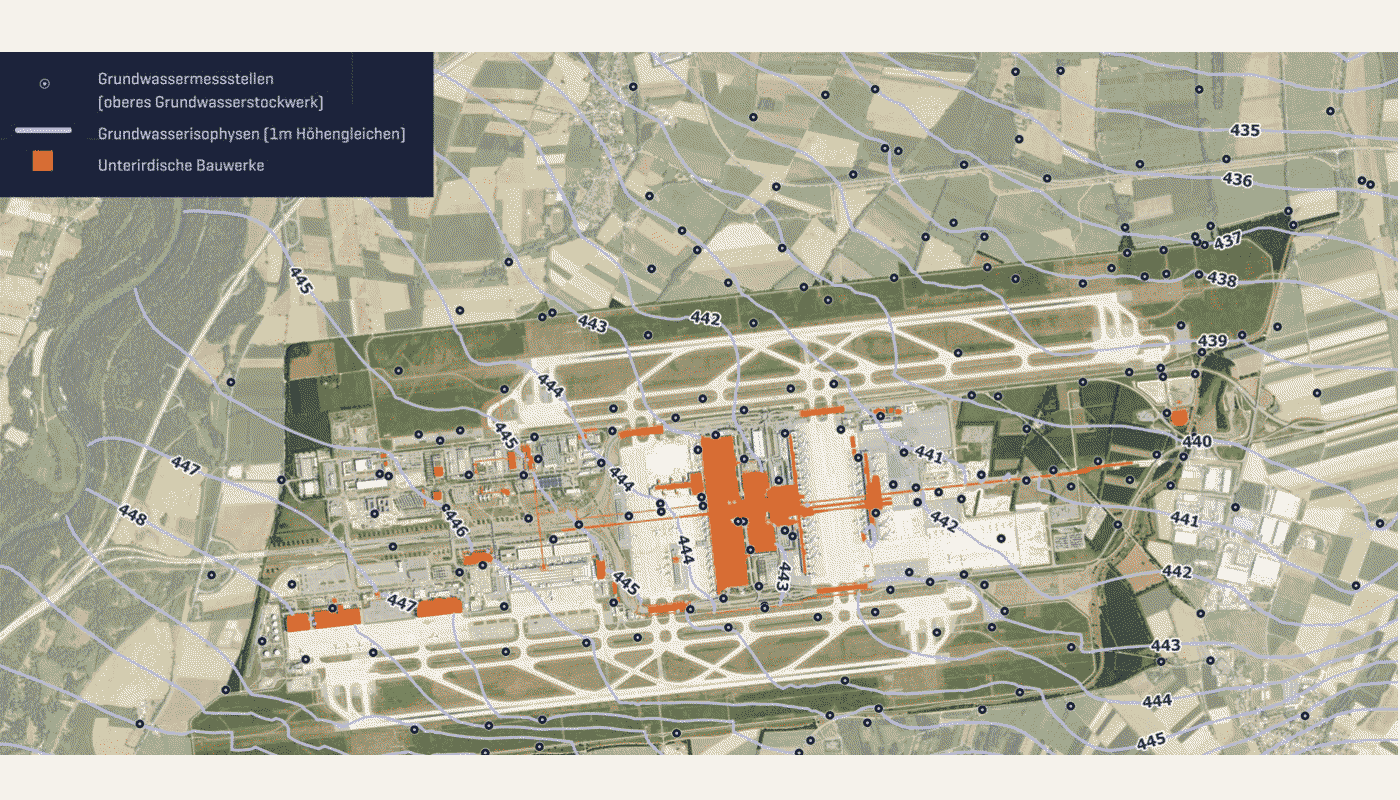
Groundwater monitoring stations at Munich Airport

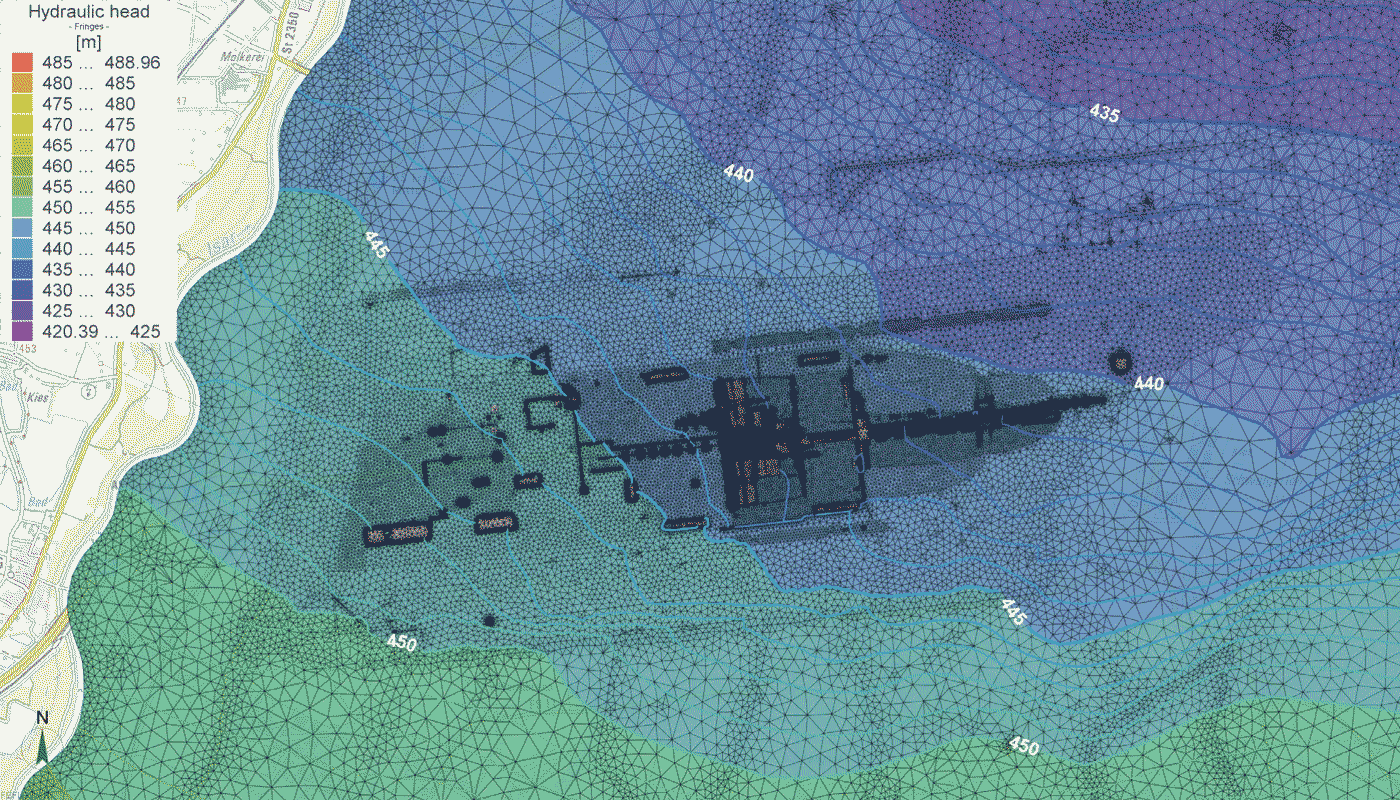
Excerpt from the groundwater flow model

Groundwater Flow Model

The measurement data from the groundwater monitoring program form the basis for a numerical groundwater flow model covering an area of approximately 330 km². It enables predictions regarding construction projects and is used to assess and document groundwater conditions at Munich Airport and in the surrounding area.

Surface Water Monitoring

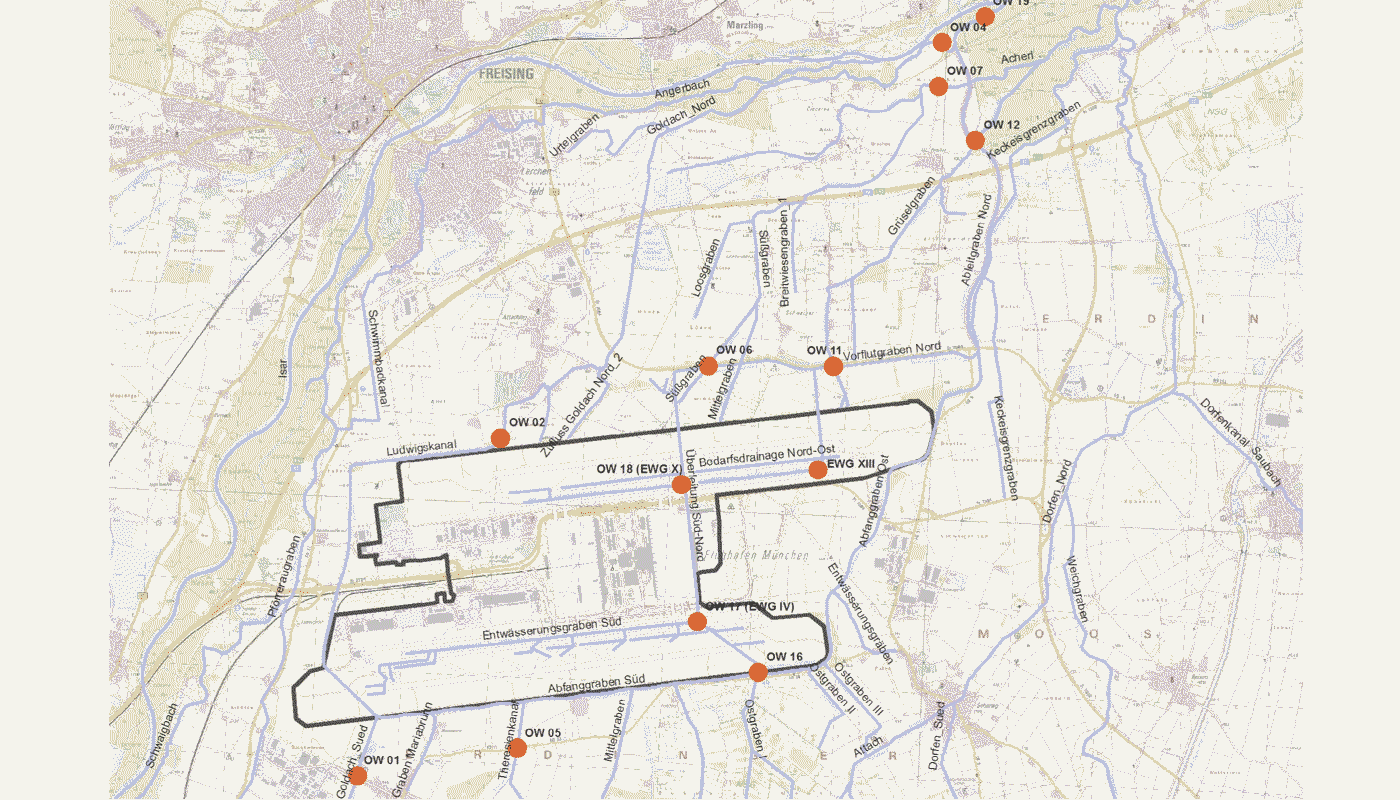
The bodies of water surrounding the airport are regularly tested for discharge, chemical composition, and microbiological quality. The results show that the surface waters are of good ecological quality.

Monitoring sites on surface waters

Water Protection

Water protection is a top priority at Munich Airport. The unique characteristics of the site, including high groundwater levels, were thoroughly taken into account as early as the planning and construction phases—an approach that has been consistently maintained to this day.

A sophisticated drainage system collects wastewater separately based on its source and level of contamination. Contaminated water is treated or routed to the Eitting wastewater treatment plant before it re-enters the water cycle. Modern monitoring systems track the volume and quality of the water flows.

Preventive and Protective Measures

Munich Airport implements comprehensive preventive and safety measures to protect groundwater and surface water. The handling of water-polluting substances is subject to strict legal requirements and is safeguarded by technical safeguards, continuous monitoring, and trained personnel.

Special systems are used to prevent contamination from winter operations: soil filtration systems to treat deicing agents carried into green spaces, the degradation system area along the runways, and deicing wastewater basins for the controlled collection of heavily contaminated wastewater.

Kerosene and other water-polluting substances are stored in double-walled tanks and transported via monitored systems. Regular inspections by independent experts ensure a high standard of safety and minimize risks to people and the environment.

Soil filters

Terrain breakdown system